Crypto Trading Bots for Beginners: A No-Jargon Guide
Crypto trading bots for beginners can look intimidating, mostly because the industry describes them badly. A trading bot is software that buys and sells crypto for you, following rules that were set in advance. That is the whole idea. Everything else is detail.
This guide covers what a bot actually does and what it costs. It also covers what a bot cannot do, and how to start without risking money you did not plan to risk. No jargon goes undefined here.
What a crypto trading bot actually does
A bot does three things in a loop, over and over.
First it reads market data, meaning current prices and trading volume from an exchange. Second it checks that data against its rules. Third it places or cancels an order if a rule is met.
Then it starts again. That loop runs continuously, day and night, because crypto markets never close.
A rule can be very simple. "Sell if the price falls 5% below my entry" is a complete rule. Real strategies combine several rules, but none of them are magic. They are instructions a person wrote down.
The bot does not decide what is a good idea. It applies the instructions it was given, exactly, every time.
Why beginners consider a bot at all
There are three practical reasons, and none involve promises about returns.
Emotional consistency. People break their own plans under pressure. They sell in a panic near the bottom, or hold a loser hoping it recovers. A bot does neither, because it does not feel anything.
Coverage. Crypto trades every hour of every day. You cannot watch that, and moves happen while you sleep. A bot is awake for all of it.
Speed. When a rule triggers, the order goes in immediately. No hesitation, no second-guessing.
Those are the honest benefits. Note what is missing from that list: any claim about profit. A bot improves how a strategy is executed. It does not make a weak strategy work.
What a bot cannot do
This part gets skipped in most beginner guides, so here it is plainly.
A bot cannot predict the market. It reacts to what has already happened, using rules. The US Commodity Futures Trading Commission states this directly in a customer advisory, warning that automated systems cannot predict sudden market moves. It also flags guaranteed-return promises as a fraud marker.
A bot cannot remove risk. Trading involves risk of loss, including loss of the money you put in. Automation does not change that.
A bot cannot fix a bad strategy. Automating flawed logic just applies the flaw faster and more consistently.
Our piece on whether crypto trading bots actually work goes further. It separates what bots reliably deliver from what gets oversold.
The two kinds of bots beginners meet
Products in this space split into two rough groups. Knowing which one you are looking at prevents most confusion.
Build-it-yourself platforms give you tools to construct a strategy. You choose indicators, set parameters, and test it. The upside is control. The downside is that beginners rarely know which settings are sensible, and a badly configured bot is worse than none.
Pre-built strategy platforms give you finished strategies to select from, usually sorted by risk level. The upside is that you are not guessing at settings. The downside is you rely on someone else's logic, which makes understanding that logic more important, not less.
Neither type is inherently safer. What matters is whether you can see how the strategy behaves before you commit money.
How much crypto trading bots cost
Beginners often ask about price before safety, so let us cover both.
Most subscription platforms charge a monthly fee. Entry tiers commonly sit in the $20 to $30 range. Higher tiers run to $100 or more for extra strategies and features.
Some exchanges include basic bots at no extra subscription cost. There you pay only the normal trading fees.
Then there are the costs that are easy to miss. Every trade pays an exchange fee. A bot that trades often generates more of those fees than one that trades rarely.
There is also slippage, which is the gap between the price you expected and the price you actually got. It is small per trade and adds up across many.
Be cautious about "free" bots that ask for a deposit into their own platform. That is not a pricing model. That is custody, and it is the pattern behind most losses in this category.
The safety question: where your money sits
This is the single most important thing for a beginner to understand, so it gets its own section.
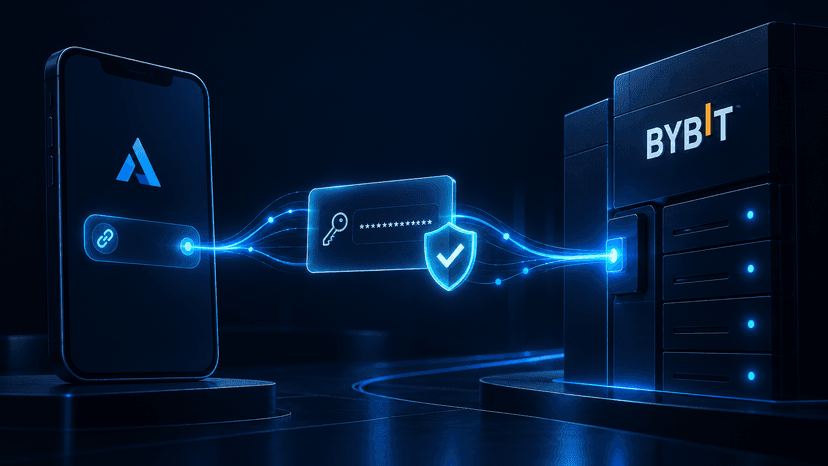
A legitimate bot never holds your funds. Your crypto stays in your own exchange account. The bot connects to it through an API key, which is a credential that lets software act on your account within limits you set.
Those limits matter enormously. When you create the key, the exchange asks which permissions to grant. Read and trade permissions let a bot do its job. Withdrawal permission lets it move funds out.
Binance's API documentation shows these as separate switches that you control. No trading strategy needs withdrawal access, ever. Any product that asks for it has told you something important about itself.
Our guide to how trade-only API keys keep funds on your exchange walks through creating one properly. Read it before you connect anything.
The scale of the problem justifies the caution. The FBI's Internet Crime Complaint Center recorded roughly $11.4 billion in cryptocurrency-related losses reported in 2025.
For the checklist version, see our list of nine red flags of a trading bot scam. It sorts them by how easily you can verify each one.
How to start, step by step
Here is a sensible order. It is deliberately slow.
1. Pick one strategy and understand it. Know how often it trades, and how bad its worst losing stretch has been. That second number is called maximum drawdown. Our explainer on reading a maximum drawdown figure covers why it matters more than a win rate.
2. Watch it run before paying. Use a demo mode that runs the strategy on live market prices with virtual money. Give it about two weeks. You want to see quiet days, busy days, and at least one losing stretch.
3. Check your own reaction. If a 5% dip on demo money makes you anxious, a higher-risk strategy is wrong for you. Learning that costs nothing now and a lot later.
4. Connect with a trade-only API key. Read and trade on, withdrawal off. Enable IP whitelisting if your exchange supports it, so the key only works from approved servers.
5. Start small. Use an amount you can afford to lose entirely. Keep watching after you go live.
None of these steps is exciting. In this category, excitement is usually the warning sign.
FAQ
Are crypto trading bots good for beginners? They can be. It depends on whether the beginner understands the strategy and starts with money they can afford to lose. Bots help most with discipline and 24-hour coverage. They do not replace understanding what you are running.
How much money do you need to start with a trading bot? It depends on the platform and the exchange minimums. Many strategies expect a few hundred dollars to work sensibly. The better question is how much you could lose without it affecting your life. Start there.
Can crypto trading bots lose money? Yes. They follow rules, and no set of rules wins in every market condition. Losing periods are normal, and the bot keeps executing through them.
Do I need to know how to code to use one? No. Building your own strategy requires programming, but many platforms offer pre-built strategies you select instead of code. You still need to understand how the strategy behaves.