New Strategy: Titan Trades 49 Altcoins on Confirmed Trends
Titan is live. It is a systematic trend strategy for the altcoin futures market, and it closes 34% of its trades in profit.
That number is not a disclaimer we buried at the bottom. It is the design.
Titan loses small and often, and wins large and rarely. Across 791 backtested trades its average win was 4.24 times its average loss, which produced a profit factor of 2.15. This post explains what that means, because a strategy that is wrong most of the time is worth understanding before you run it.
What Titan does
It watches a curated basket of 49 liquid coins drawn from the top-100 universe and opens a position only when several independent signals agree that a move has real strength behind it. No guessing at tops or bottoms.
Three design choices define it:
Position sizing by volatility. Every position carries a risk limit from the moment it opens, scaled to how much that coin actually moves. A volatile coin gets a smaller position than a calm one for the same risk.
Exposure spread across many coins. Rather than concentrating in one or two assets, Titan holds several altcoin positions at once and adds new ones only when a trend is confirmed.
Exit on fading momentum, not on reversal. Titan steps out when strength disappears rather than waiting for the market to turn against it. This is what produces many small losses.
Positions typically run from hours to days. Activity rises in strongly trending markets and slows in choppy ones, so quiet stretches are expected behaviour rather than a fault.
The numbers, and how to read them
| Metric | Titan |
|---|---|
| Win rate | 34% |
| Average win / average loss | 4.24x |
| Profit factor | 2.15 |
| Maximum drawdown | −18.9% |
| Sharpe ratio | 2.83 |
| Trades | 791 |
| Period | Aug 2024 – Oct 2026 |
Backtested on Binance USD-M perpetual futures with a $10,000 starting balance, net of trading fees, slippage and funding payments. Backtested performance is hypothetical and does not guarantee future results. Trading involves risk of loss, including loss of principal.
Why a 34% win rate is not a weakness
Win rate is the share of trades closed in profit. On its own it says nothing, because it ignores size entirely.
Two strategies, 100 trades each:
| Strategy A | Strategy B | |
|---|---|---|
| Win rate | 80% | 34% |
| Winning trades | 80 × $50 = $4,000 | 34 × $400 = $13,600 |
| Losing trades | 20 × $250 = $5,000 | 66 × $95 = $6,270 |
| Net | −$1,000 | +$7,330 |
| Profit factor | 0.80 | 2.17 |
Strategy A wins far more often and loses money. Strategy B is wrong twice for every time it is right and comes out ahead.
The number that separates them is profit factor: gross profit divided by gross loss. Titan's is 2.15, meaning it earned $2.15 for every $1 it lost across the tested period.
A high win rate would actually be a warning sign in this design. It would suggest profits were being taken too early, capping the large moves the whole approach depends on.
What profit factor does not tell you
Four limits worth knowing before you treat any profit factor as proof.
It hides drawdown depth. Two strategies with the same profit factor can have very different worst moments. Read it beside maximum drawdown, which for Titan is −18.9%. More on that in our drawdown guide.
It depends on sample size. A profit factor of 3.0 across 20 trades is noise. Titan's figure comes from 791 trades, which is large enough that a few outliers cannot carry it.
One trade can distort it. A useful check on any published figure is what it becomes with the best trade removed.
It inflates without costs. A profit factor computed before fees, slippage and funding is a ceiling, not an outcome. Titan's backtest is net of all three. How to check this on any strategy is covered in what backtesting proves.
How Titan differs from our other strategies
Our existing strategies trade a small number of major pairs. Titan is the first to work across a wide altcoin basket, and that changes its character rather than simply raising its risk.
| Existing strategies | Titan | |
|---|---|---|
| Asset scope | A few major pairs | 49 coins from the top-100 |
| Entry logic | Varies by strategy | Confirmed trend only |
| Exit logic | Varies by strategy | Momentum fade |
| Typical hold | Varies | Hours to days |
| Win rate profile | Higher | Lower by design |
| Minimum balance | From $500 | $1,000 |
Titan is a medium-risk strategy with a backtested maximum drawdown of −18.9%. It is not a replacement for the conservative options, and it is not an upgrade. It is a different shape of return.
Who Titan suits, and who it does not
Titan may suit you if:
- You can sit through a losing streak without switching strategies, because two thirds of trades close at a loss by design
- You read drawdown before return
- Your balance is at least $1,000 and is money you can afford to lose
- You understand that altcoin futures positions can be liquidated
Titan is not for you if:
- A run of losing trades would make you stop the strategy at its worst point
- You expect steady weekly gains
- You have not yet watched a strategy through a quiet period in paper mode
- Your deposit is money you need
How to start
Titan runs for 14 days on live market data in paper mode before anything else. No exchange connection, no payment, no card. You watch its real behaviour, including the losing streaks, and decide afterwards.
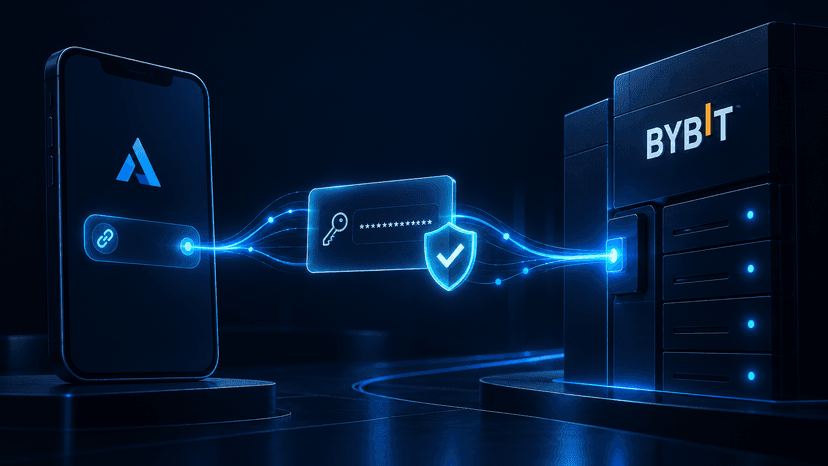
Going live requires a trade-only API key on your own exchange account. AlgoTitan can place and cancel orders and cannot withdraw or transfer funds. You can revoke access from your exchange at any time.
Paper results are simulated and may differ from live results due to fees, slippage and liquidity. This is not investment advice.
Frequently asked questions
What is Titan? A systematic trend strategy for altcoin futures. It trades a basket of 49 liquid coins from the top-100 universe, entering only on confirmed trends and exiting when momentum fades.
Why is Titan's win rate only 34%? Because it cuts losing positions quickly and holds winning ones. That produces many small losses and few large gains. Its average win is 4.24 times its average loss, which is what makes the low win rate work.
What is profit factor? Gross profit divided by gross loss. Titan's backtested profit factor is 2.15, meaning $2.15 earned for every $1 lost over the tested period.
Can a strategy with a low win rate be profitable? Yes, when average wins are substantially larger than average losses. This is the normal structure of trend-following approaches.
What is Titan's maximum drawdown? −18.9% in backtesting. Larger or longer drawdowns are possible. Past performance does not guarantee future results.
How many trades does Titan make? It holds several positions at once and adds new ones only when a trend is confirmed, so activity rises in trending markets and slows in choppy ones.
What is the minimum balance for Titan? $1,000.
Can I test Titan before paying? Yes. Every plan starts with a 14-day paper trading trial on live market data with a virtual balance, with no card and no exchange connection required.
Can I switch away from Titan? Yes. You can pause, stop or switch strategies from the dashboard at any time. The number of switches per month depends on your plan.
The short version
Titan is a trend strategy for altcoin futures that is wrong roughly two times out of three, on purpose. It loses small and often, wins large and rarely, and the ratio between those two is where its edge sits.
The number that captures this is profit factor, not win rate. Titan's backtested profit factor is 2.15 across 791 trades, with a maximum drawdown of −18.9%.
Those four figures belong together. A strategy presented with only a return number has given you none of them.
Titan runs for 14 days on live market data in paper mode before any exchange connection or payment. Backtested and paper results are hypothetical and may differ from live results due to fees, slippage and liquidity. Past performance does not guarantee future results. Trading involves risk of loss, including loss of principal. This is not investment advice.