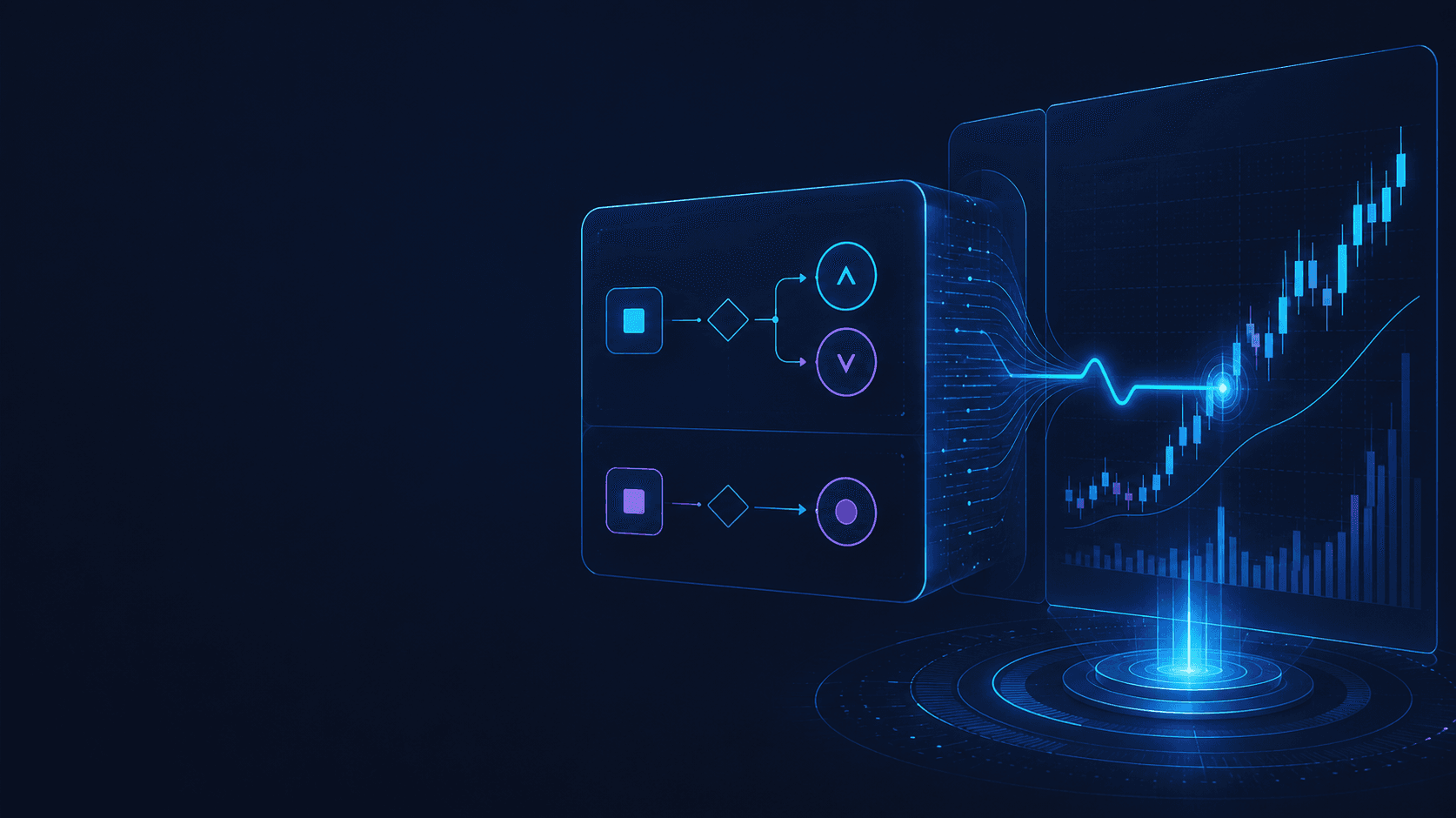
What is algorithmic trading in crypto?
Algorithmic trading means a fixed set of rules decides when to buy and sell, and a computer carries out those trades automatically. Instead of watching charts and acting on how you feel, you define the logic in advance, and the program follows it exactly, every time, without hesitation or second-guessing.
The word sounds technical, but the idea is ordinary. A rule like "if this happens, do that" is an algorithm. "If the price drops 5% below where I bought, sell" is a complete trading algorithm. Everything else is refinement.
The reason it exists is not that computers are smarter than people. It is that computers are not emotional. Most retail trading losses come from panic selling, revenge buying, and holding losers too long. An algorithm does none of that, because it does not feel anything.
The core idea: rules instead of moods
A human trader and an algorithm can follow identical logic and get opposite results, because the human breaks the plan under pressure.
Picture a simple rule: take profit at 10%, cut losses at 5%. On paper, easy. In practice, a person watching a position climb past 10% often holds "just a little longer" out of greed, then rides it back down. The same person watching a loss hit 5% often waits "for it to recover", turning a small planned loss into a large unplanned one.
The algorithm executes both exits the instant the condition is met. Its entire advantage is that it cannot talk itself out of the plan.
This is the honest core of algorithmic trading, and it is smaller than the marketing suggests. The value is not a secret money-printing formula. The value is discipline that does not erode when real money is on the line.
How a crypto trading algorithm actually works
Every algorithm, from a one-line rule to an institutional system, moves through the same four steps.
1. Data in
The algorithm reads market data: prices, volume, and sometimes dozens of derived measurements. In crypto this runs continuously, because the market never closes. This is the always-on nature that makes automation genuinely useful in crypto specifically, where a human cannot watch a 24/7 market without sleeping.
2. Signal
The rules evaluate the data and produce a decision: buy, sell, or wait. A signal is just the output of the logic. "Wait" is a real and frequent output, which surprises people who expect constant activity.
3. Risk sizing
Before acting, a well-built algorithm decides how much to commit. Position sizing, maximum exposure, and stop levels are set here. This step separates a disciplined system from a reckless one, and it is invisible in most marketing because it is not exciting.
4. Order out
The algorithm places the order on the exchange, usually through an API connection, and records the result. Then it returns to step one and repeats, indefinitely.
The loop is the whole thing. Sophistication lives in the rules, not in the structure.
Common types of crypto trading strategies
"Algorithmic trading" is a container for very different behaviours. A few common families, in plain terms:
- Trend following rides a move in one direction and exits when it reverses. Patient, sometimes quiet for long stretches.
- Mean reversion bets that unusually large moves partly snap back. More active, more frequent trades.
- Arbitrage exploits price gaps between markets. Fast, technical, and the specific label scammers most often misuse, since "crypto arbitrage bot" sounds sophisticated and low-risk while frequently being neither.
- Market making places buy and sell orders around the current price to capture the spread. High frequency, thin margins.
You do not need to master these to use automation. But recognising them helps you read a strategy honestly: a quiet trend follower and a hyperactive mean-reversion system are both working correctly when they behave in opposite ways.
Algorithmic trading vs bots vs signals
These three terms get used interchangeably and mean different things. The distinction matters because it changes who is responsible for the decision.
Algorithmic trading is the general idea: rules-based, automated decisions.
A trading bot is the software that runs an algorithm and connects to your exchange. The bot is the vehicle; the algorithm is the driver. A bot is only as good as the logic inside it.
Signals are different in kind. A signal service sends you a "buy now" alert, and you place the trade. There is no automation, and the decision, timing, and discipline are still yours. Many products marketed as bots are signal channels wearing a costume, which matters because signals reintroduce the exact emotional gap that algorithmic trading exists to remove.
A quick way to tell them apart: if the product's core output is a message telling you to act, it is signals. If it acts for you within limits you set, it is automation.
What algorithmic trading cannot do
This section is where honest guides separate from sales pages.
It cannot predict the future. No algorithm knows what the market will do next. It applies rules to what already happened. The US Commodity Futures Trading Commission put this plainly in a customer advisory warning that automated trading and AI schemes cannot predict the future or sudden market changes, and that promises of guaranteed or unreasonably high returns are a fraud marker.
It cannot remove risk. A rule-based system can lose money, sometimes in stretches, because markets do things no ruleset anticipated. Trading involves risk of loss, including loss of principal, and automation does not change that.
It cannot fix a bad strategy. Automating flawed logic just applies the flaw faster and more consistently. The algorithm is a discipline multiplier, and discipline applied to a losing plan multiplies the losses.
It is not passive income. This framing is both misleading and, in many jurisdictions, a compliance red flag. A strategy needs monitoring, and it can have losing periods. "Set it and forget it" is a marketing line, not a description of reality.
Does algorithmic trading actually work?
Yes, in a specific and limited sense that is worth stating carefully.
It reliably does what it is designed to do: execute a defined strategy without emotional interference, continuously, on a market that never sleeps. That is a real and valuable capability.
It does not reliably produce profit, because profit depends on whether the underlying strategy has an edge, on market conditions, and on costs like fees and slippage. A perfectly disciplined execution of a mediocre strategy is still a mediocre strategy.
So the useful question is never "does algorithmic trading work?" It is "does this strategy have a sound basis, and can I see how it behaves before committing real money?" The scale of crypto fraud makes that second half essential: the FBI's Internet Crime Complaint Center reported roughly $11.4 billion in cryptocurrency-related losses in 2025, with crypto investment fraud the largest slice. Much of that traces to products that promised what algorithms cannot deliver.
How beginners can start sensibly
If the concept appeals, the safe on-ramp is boring by design:
- Understand the strategy before the software. Know what behaviour to expect: how often it trades, how deep its losing stretches can go, when it stays quiet.
- Watch before you commit. Use a paper or demo mode that runs the strategy on live market data with virtual funds, so you see its real temperament before any money is exposed.
- Connect with a trade-only API key. When you do go live, the connection should permit trading only, never withdrawals, so your funds stay on your own exchange.
- Start small and keep watching. Automation is not an excuse to stop paying attention.
None of these steps is exciting, which is the point. The excitement in this category is usually the warning sign.
FAQ
Is algorithmic trading legal in crypto? Yes, in most jurisdictions. Running a rules-based strategy on your own exchange account is a normal activity. Local regulations vary, and product availability depends on where you are and which exchanges you can access.
Do I need to know how to code to use algorithmic trading? No. Writing your own algorithms requires programming, but many platforms offer pre-built strategies you select rather than code. The trade-off is that you rely on someone else's logic, which makes understanding and observing that logic more important, not less.
Is algorithmic trading the same as a trading bot? Not quite. Algorithmic trading is the concept of rules-based automated trading. A bot is the software that runs an algorithm and connects to your exchange. The algorithm is the logic; the bot is the machine that runs it.
Can algorithmic trading guarantee profit? No. Any product claiming guaranteed returns is a red flag. Algorithms execute strategies with discipline, but no strategy is immune to losses, and markets can move in ways no ruleset predicted.
Why use an algorithm instead of trading manually? The main advantage is emotional consistency. Algorithms follow the plan exactly, without the panic, greed, or hesitation that cause many manual trading losses. They also run continuously on a 24/7 market.